


I have tested over twenty AI writing tools in the past two years. I have bought subscriptions I never used, fallen for marketing hype that evaporated in weeks, and wasted hours on tools that promised the world and delivered generic garbage. But I have also discovered tools that genuinely transformed how I write. Here is my honest, no-BS take on what actually works in 2026.
Let me tell you about the most expensive mistake I ever made. It was early 2025 and I had just discovered AI writing tools. I was like a kid in a candy store. Every week brought a new “game-changing” tool that would “revolutionize” my writing workflow. I signed up for everything. I bought subscriptions I did not need. I spent hours learning tools that were obsolete within months. By the time I realized what was happening, I had wasted over two thousand dollars and countless hours on tools that did not move the needle.
The paradox of choice is real. When you have too many options, you make worse decisions. You get paralyzed by analysis. You chase the shiny new thing instead of mastering the tools you already have. The AI writing landscape in 2026 is more crowded than ever. But here is the honest truth. You do not need to use every tool. You do not need to be an expert in every platform. You need to know which tools are best for which tasks and build a workflow around them.
The tools in this category split into three camps. General-purpose chatbots handle any writing task but require careful prompting. Dedicated writing platforms offer templates and brand voice features for marketing teams. Embedded AI edits and generates within the app you already use for work.
What follows is my comprehensive review of the best AI writing tools in 2026. I have organized them by what they actually do well. No hype. No marketing fluff. Just the honest truth from someone who has tested them all.
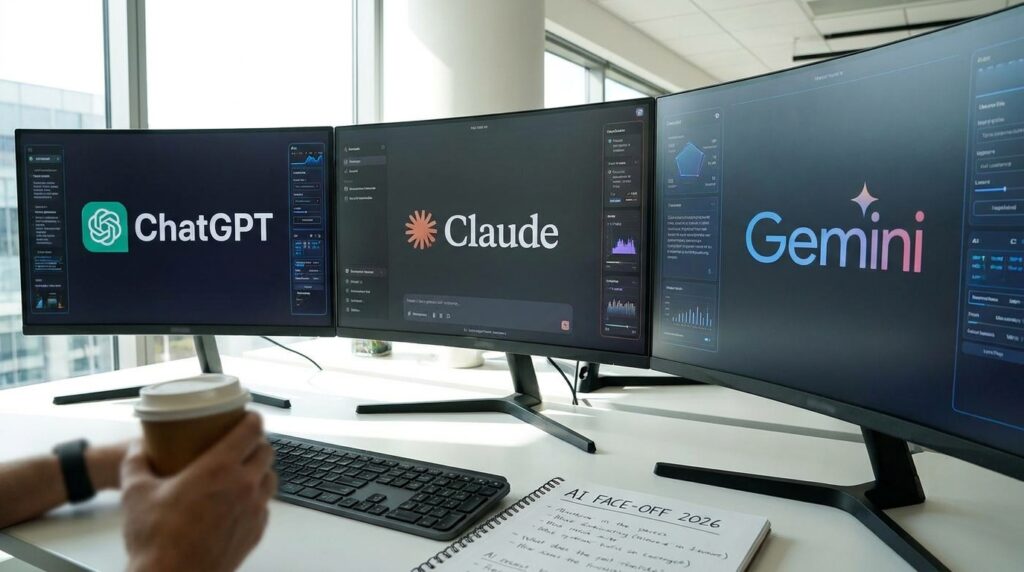
The General-Purpose Heavy Hitters
These are the tools you reach for when you need help with almost any writing task. They are the Swiss Army knives of the AI writing world.
Claude: The Gold Standard for Writing Quality
If I had to pick one tool as the best AI for writing in 2026, it would be Claude. As of July 2026, Claude Opus 4.6 by Anthropic leads the writing leaderboard with a score of 31.9, followed by LongCat-Flash-Thinking-2601 at 30.0 and Claude Opus 4.5 at 27.2. The gap is not small. Claude is significantly ahead of the competition when it comes to actual writing quality.
What makes Claude different from other AI writing tools is the depth and nuance of its output. Claude produces the highest quality writing output for most professional use cases, especially long form content and nuanced tone matching. The prose flows with a natural cadence that does not have the robotic, repetitive “AI smell” that characterizes other models. Claude’s writing more frequently switches up the formula, with sentence lengths that vary, fresher transitions, and cleaner prose.
The one million token context window is a game-changer for writers. You can feed Claude entire books, research papers, or extensive conversations and it maintains perfect contextual awareness. This means it does not lose the thread across long documents. Claude handles long form better than most competitors because it can reference earlier sections when writing later ones.
Claude also excels at instruction-following, long-document analysis, and agentic work. Built on Constitutional AI principles, it excels at complex reasoning, sophisticated writing, and professional-grade assistance.
What it does best: Long-form writing, nuanced tone matching, complex reasoning, research synthesis, and any task that requires processing large amounts of information. It is the tool for when quality matters more than speed.
Where it falls short: It is not as versatile as ChatGPT. It does not have built-in image generation or the same ecosystem of plugins.
Who should use it: Professional writers, researchers, consultants, and anyone who needs high-quality writing that sounds human. If you are writing white papers, thought leadership, or long-form content, Claude is the tool.

ChatGPT: The Versatile Workhorse
ChatGPT remains the most widely used AI writing tool, and for good reason. As of March 2026, ChatGPT has over 769 million monthly active users. No competitor can match that ecosystem of integrations, plugins, and tools built on top of it.
What makes ChatGPT indispensable is its versatility. It is strong at turning a rough brief into a first draft, handling everything from ideation and outlining to drafting and repurposing. The same interface handles contracts, blog posts, emails, and creative writing. It is the one tool that can do almost anything.
In tests, ChatGPT has consistently led as the best generalist AI and for research tasks. It organizes information effectively and provides complete, well-structured responses. The paid Plus tier is twenty dollars per month, with a cheaper Go tier at about eight dollars, and Team seats ranging from twenty five to thirty dollars per user.
The ecosystem is a significant advantage. ChatGPT has the widest range of plugins, custom GPTs, and integrations of any AI writing tool. You can connect it to almost any workflow. The built-in DALL-E integration means you can generate images without switching tools. ChatGPT handles images, online research, and deep dives into new topics.
What it does best: General-purpose writing, brainstorming, creative tasks, fast drafting, research, and everyday assistance. It is the best starting point for anyone new to AI writing.
Where it falls short: It can feel generic compared to Claude. ChatGPT tends to repeat itself in long documents unless you manage the conversation carefully. It also provides only basic editing capabilities.
Who should use it: Everyone. ChatGPT is the best all-purpose AI writing tool. It is the foundation upon which you can build your entire writing workflow.
Gemini: The Workspace Native
Google Gemini has become deeply integrated into Gmail, Google Docs, Sheets, Slides, and Drive. For writers already operating within Google’s ecosystem, Gemini is the natural choice.
What makes Gemini different is the context. It pulls information from Gmail, Drive, and Docs, giving it access to your existing work. It can draft whole emails from scratch and help with ideation and quick drafts. The multimodal AI writing includes code generation and translation built into the Google ecosystem.
On Android, Gemini feels deeply connected to the device and the apps you already use. You can ask Gemini to interact with Keep, create items in Tasks, work with content from Docs, and more. Google AI Pro is nineteen dollars and ninety nine cents per month.
What it does best: Integration with Google Workspace, email drafting, and tasks that benefit from access to your existing documents and conversations.
Where it falls short: On desktop, the experience is less convincing than on mobile. Gemini can be inconsistent with day-to-day questions, sometimes exaggerating or using overly dramatic wording.
Who should use it: Anyone who lives in Google Workspace. If your writing workflow revolves around Gmail, Docs, and Drive, Gemini is the path of least resistance.

The Marketing and Copywriting Specialists
These tools are built specifically for marketing teams and copywriters who need to produce content at scale with consistent brand voice.
Jasper: The Marketing Content Factory
Jasper has positioned itself as the go-to AI writing tool for marketing teams. It is less of a “writer” and more of a marketing content factory with a personality disorder that you train. It is built primarily for marketers and agencies, not casual writers or hobbyists.
What makes Jasper different from general-purpose tools like ChatGPT is its specialization. Jasper is a specialized layer built atop multiple LLMs. Instead of relying on a single model for all tasks, it picks the most suitable LLM for a given job. For example, it might use Gemini models to create visuals, advanced GPT models to generate ad scripts, and Claude to fine-tune drafts.
Jasper offers autonomous, purpose-built agents for various tasks, such as writing blog posts, YouTube video scripts, Google ads, or short-form content. It streamlines workflows and accelerates content generation while helping businesses retain their unique brand identity. Brand Voice and Knowledge asset controls produce more on-brand content than general-purpose AI writers. Jasper learns approved company tone and facts so outputs are publication-ready rather than requiring heavy editorial cleanup.
For enterprise marketers, Jasper recently launched an end-to-end GEO (Generative Engine Optimization) agent. It helps brands monitor how their content appears across AI discovery platforms such as ChatGPT and Grok. Jasper has 125K global customers, including over 900 enterprise users. Reviewers consistently rank Jasper first for enterprise brand teams.
What it does best: Marketing copy at scale, brand voice consistency across multiple writers, and multi-channel campaign automation.
Where it falls short: Jasper is expensive. It lacks a free plan, and its outputs often need heavy editing. It is overkill for casual writers or hobbyists.
Who should use it: Marketing teams, agencies, and content creators who manage multiple clients and produce outputs at scale. If you need to maintain brand consistency across dozens of writers, Jasper is worth the investment.
Copy.ai: The Fast Alternative
Copy.ai is a strong alternative to Jasper, particularly for teams that need fast marketing copy without the premium price tag. It has a rating of 4.2 stars with 54 reviews.
Copy.ai covers everything from long-form drafts to quick ad variations. It is designed for speed and ease of use, making it a popular choice for startups and small businesses.
What it does best: Fast marketing copy generation, ad variations, and social media content.
Where it falls short: It does not have the same depth of features as Jasper or the same brand voice capabilities.
Who should use it: Startups, small businesses, and marketers who need fast copy without the premium price tag.
Writesonic: The Budget-Friendly Option
Writesonic offers a range of templates and brand voice presets for marketing content. It has an Article Wizard for long-form content and offers a free tier with 10,000 words per month. Reviewers consistently rank Writesonic for SEO-focused teams.
What it does best: Budget-friendly marketing copy generation.
Where it falls short: The quality is not as polished as Jasper or Claude.
Who should use it: Budget-conscious marketers and small businesses.
Part Three: The Editing and Refinement Tools
These tools are not designed to generate content from scratch. They are designed to make your existing content better.
Grammarly: The Best Editing Tool
Grammarly is the best editing tool regardless of which generator you use. It works silently in the background across every writing platform via a browser extension. Grammarly worked best for improving clarity and correctness.
What makes Grammarly indispensable is its focus on editing. Editing is its core product, not an afterthought bolted onto a chatbot. It catches not just grammar errors but structural problems: unclear topic sentences, weak transitions, passive voice overuse, and redundant phrasing.
Grammarly has evolved beyond grammar correction into a full communication assistant. It helps users rewrite content, adjust tone, improve clarity, generate emails, and create business documents.
Grammarly Business starts at $15 per user per month billed annually. Grammarly is designed to meet the needs of teams and organizations of all sizes to ensure brand consistency and share organizational knowledge quickly.
What it does best: Grammar correction, tone optimization, clarity improvement, and structural editing.
Where it falls short: It is not designed for long-form generation. It is an editing tool, not a content creation tool.
Who should use it: Anyone who writes professionally. Grammarly is essential for anyone who wants to improve the quality of their writing.
QuillBot: The Paraphrasing Specialist
QuillBot is the tool for paraphrasing and sentence refinement. It offers multi-mode paraphrasing with grammar checking, plagiarism detection, AI content detection, and citation generation.
What makes QuillBot different from Grammarly is its focus on rewriting rather than just correcting. If you need to rephrase existing content, QuillBot is the tool. QuillBot Premium costs $99.95 per year compared to Grammarly’s $144 per year.
However, Grammarly’s grammar checking is substantially better than QuillBot’s. QuillBot’s grammar checker is best thought of as a useful bonus feature for existing QuillBot users, not a standalone selling point.
What it does best: Paraphrasing, rewriting, and sentence refinement.
Where it falls short: Grammar checking is basic compared to Grammarly.
Who should use it: Writers who need to rephrase content or avoid plagiarism.
Wordtune: The Tone Refiner
Wordtune is a solid alternative for sentence rewriting and tone adjustment. It excels at helping writers adjust the tone of their writing without changing the meaning.
What it does best: Sentence rewriting and tone refinement.
Where it falls short: It is not as comprehensive as Grammarly for editing.
Who should use it: Writers who need to adjust tone and refine sentences.
Part Four: The Specialized Writing Tools
Sudowrite: The Fiction Writer’s Choice
Sudowrite remains the leader for fiction writers. Every feature was built for narrative work. The training data leans heavily on fiction. The interface assumes you are working on a story.
Sudowrite has a stack of tools designed for the actual moments when fiction writers get stuck. Write generates prose continuation, with Auto mode that follows the story and Guided mode where you steer with direction. Its Story Bible, Rewrite Mode, and Describe+ features help authors expand scenes, deepen emotional beats, and avoid creative fatigue.
Sudowrite’s fiction-trained Muse model writes mature content without restrictions while maintaining the narrative quality, character voice, and sensory detail that 92% of its users say helps them complete manuscripts faster. Muse is the default model for romance, erotica, horror, and thriller.
What it does best: Fiction writing, scene expansion, and creative writing assistance.
Where it falls short: It is highly specialized. It is not useful for business writing or marketing content.
Who should use it: Fiction writers, novelists, and creative writers.
NovelCrafter AI: The Plotting Assistant
NovelCrafter AI is another tool built specifically for fiction writers. It helps with plotting, character development, and story structure.
What it does best: Plotting and story structure for fiction.
Where it falls short: It is specialized for fiction.
Who should use it: Fiction writers who need help with structure and plotting.
Part Five: The Research Tools
Perplexity: The Research Accelerator
Perplexity combines web search with AI-generated answers and citations. It is like having a research assistant that reads dozens of articles and gives you a summary with sources.
What it does best: Research, fact-checking, and finding sources with citations.
Where it falls short: It is a research tool, not a writing tool.
Who should use it: Writers who need to research topics quickly and accurately.
The Comparison Table
| Tool | Best For | Strength | Weakness | Price |
|---|---|---|---|---|
| Claude | Writing quality | Best long-form coherence, natural prose, 1M context window | Most expensive | $20/mo |
| ChatGPT | Versatility | Wide ecosystem, image generation, plugins | Generic, loses thread in long docs | $20/mo |
| Gemini | Google integration | Deep Workspace integration | Inconsistent on desktop | $20/mo |
| Jasper | Marketing copy | Brand voice consistency, multi-LLM | Expensive, needs heavy editing | Custom |
| Grammarly | Editing | Best-in-class editing | Not for generation | $12/mo |
| Copy.ai | Fast copy | Quick marketing copy | Less depth than Jasper | $49/mo |
| Writesonic | Budget copy | Free tier available | Lower quality | Free tier |
| Sudowrite | Fiction | Story Bible, creative features | Specialized | $19/mo |
| Perplexity | Research | Citations, web search | Research only | $20/mo |
| QuillBot | Paraphrasing | Multi-mode rewriting | Basic grammar checking | $9.95/mo |
The Honest Truth About AI Writing Tools
Here is what nobody tells you about AI writing tools. They do not replace writing. They remove friction. The right tool is the one that helps you move from idea to usable draft faster, without stripping away control over the final output.
Here is what separates good AI writing from bad.
Tone consistency is the first differentiator. A tool that produces generic corporate prose regardless of context is not useful for teams with an established voice. The best tools accept brand voice samples or style guides and produce output that sounds like it came from your team, not from a template.
Long-form coherence is the second. Most AI tools write competent paragraphs but lose the thread across 1,500 plus word pieces. Claude handles long form better than most competitors because of its larger context window.
Editing quality matters as much as generation. The best AI writing tools catch not just grammar errors but structural problems: unclear topic sentences, weak transitions, passive voice overuse, and redundant phrasing. Grammarly leads here because editing is its core product.
How to Build Your AI Writing Stack
The secret to using AI writing tools effectively is not finding one tool that does everything. It is building a stack of complementary tools that work together.
Start with ChatGPT. It is the most versatile tool and the best starting point. Use it for brainstorming, drafting, and everyday writing tasks.
Add Claude for quality writing. When you need careful reasoning, long-form writing, or content that needs to sound human, switch to Claude. It produces the highest quality writing output.
Add Grammarly for editing. Regardless of which generator you use, Grammarly is the best editing tool. Run everything through Grammarly before publishing.
Add Jasper for marketing scale. If you are a marketing team producing content at scale with consistent brand voice, Jasper is purpose-built for that.
Add Perplexity for research. When you need reliable, verifiable answers with citations, use Perplexity.
Add Sudowrite for fiction. If you are writing novels or creative fiction, Sudowrite is the specialized tool you need.
The Most Important Thing I Learned
If I could go back and tell my past self one thing, it would be this: the best AI writing tool is not the one with the highest benchmark score. It is the one that actually makes you more productive.
The gap between the top and 10th-ranked models shrank from 11.9% to 5.4% in a single year. The practical upshot is that which model powers your tool matters less than whether the tool fits your workflow.
The tools are constantly changing. New models emerge every month. Pricing models shift. Features get added and removed. The specific tools you use today will not be the same tools you use next year. But your understanding of what each tool does best and how to combine them will serve you forever.
Conclusion
The AI writing landscape in 2026 is rich and competitive. The tools have matured faster than anyone predicted. The question is no longer whether AI can help you write. It is which tools you should use and how you should combine them.
Claude for quality. ChatGPT for versatility. Grammarly for editing. Jasper for marketing scale. Perplexity for research. Sudowrite for fiction. Each tool has a specific strength. The best writers use all of them strategically.
Start with one tool. Master it. Then add another as you need it. The journey from tool fatigue to genuine productivity is incremental. But the payoff is substantial.
Go write something amazing.
Which AI writing tool are you most excited to try? Drop me a comment or shoot me an email. I would genuinely love to hear about your results.

Other Articles

ChatGPT vs Claude vs Gemini: 2026 Face-Off
6 AI Search Engines You Should Know in 2026